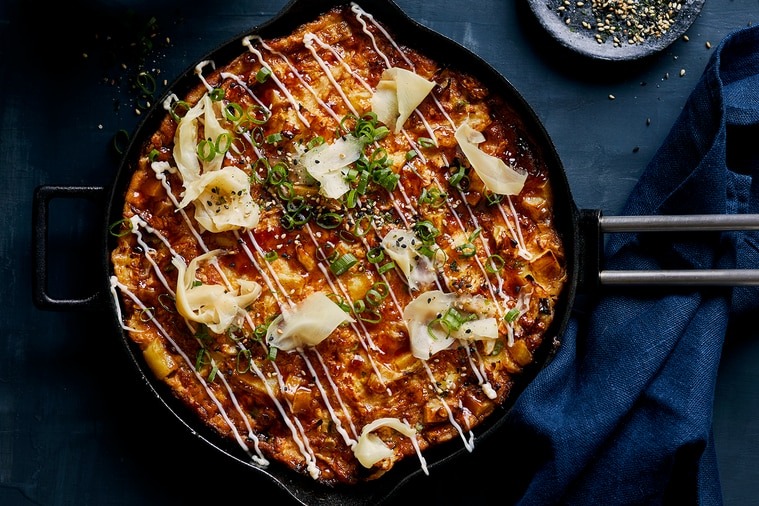
If you have ever craved a street food style meal that feels cozy, fun and a little bit theatrical, learning a good Japanese Okonomiyaki Recipe is one of the most rewarding things you can bring into your home kitchen.
Origins and spirit
At its core, okonomiyaki is a Japanese savory pancake built on a simple idea: take a light, flavorful batter, fold in a generous amount of finely shredded cabbage and your favorite add ins, then cook it on a hot griddle until the outside is crisp and golden while the inside stays tender and juicy. This dish is often associated with Osaka and Hiroshima, two regions with slightly different styles, but the heart of the recipe is the same everywhere, giving you a comforting round of sizzling goodness that feels like a cross between a pancake, an omelet and a stir fry all in one. The name itself comes from the words “okonomi” meaning “as you like it” and “yaki” meaning “grilled”, which perfectly captures the spirit of customization that makes this dish so fun, since you can build it around vegetables, pork, seafood, cheese or whatever you enjoy most without losing its Japanese soul.
Batter and base
The secret to a really satisfying okonomiyaki is the batter, which needs to be flavorful on its own while still light enough to avoid turning the pancake dense or doughy, and that balance comes from using a modest amount of wheat flour combined with dashi or water, eggs and sometimes a special ingredient like grated nagaimo or another type of yam that adds a gentle stickiness and fluffy texture. Many home cooks first discover versions of this dish through recipe platforms like https://allrecipe.org/ but what truly matters is understanding the feel of the batter in the bowl, which should be slightly thicker than crepe batter yet still fluid enough to coat the cabbage and other fillings without forming heavy clumps. When you mix it, you want everything just combined, without beating it aggressively, because overworking the flour can develop too much gluten and make the final pancake chewy instead of soft, and letting the batter rest briefly gives the flour time to hydrate and the flavors of the dashi, egg and seasoning to blend.
Ingredients
A classic Kansai style okonomiyaki usually starts with finely shredded green cabbage, which brings sweetness, crunch and volume, and should make up a surprisingly large percentage of the mixture so the pancake feels vegetable forward rather than like a thick slab of dough. Into this, you fold small slices of pork belly or bacon, or perhaps chopped shrimp, squid or other seafood, along with sliced green onions and sometimes a handful of crunchy tempura bits called tenkasu that add a subtle texture contrast when you bite into the finished pancake. Salt and a touch of soy sauce or tsuyu in the batter help season the mixture from the inside, so every bite tastes fully flavored even before you add the signature sauces and toppings on the surface.
Fillings and toppings
One of the most enjoyable aspects of okonomiyaki is how customizable it is, since the basic batter and cabbage foundation can host almost any combination of add ins, from thin strips of pork or chicken to octopus, cheese or even mochi, and each ingredient contributes its own flavor and texture to the final result. If you use sliced pork belly, you can lay the slices directly on top of the uncooked side of the pancake in the pan so that as you flip, the pork sears and its fat renders into the cabbage mixture, infusing it with savory richness, while seafood like shrimp benefits from being cut into small pieces so it cooks quickly and evenly. Vegetarian versions are just as satisfying, using extra cabbage, mushrooms, corn, or even kimchi for a tangy kick, and because the batter and toppings bring so much umami, you never feel like you are missing out on flavor by skipping meat.
Toppings
The crowning glory of okonomiyaki lies in the way it is finished once cooked, starting with a generous drizzle of okonomiyaki sauce, a thick, tangy sweet condiment similar to a richer, Japanese style Worcestershire that gives the pancake its characteristic deep brown glaze and a wonderful contrast to the mild cabbage interior. Over that, you typically add a lattice of Japanese mayonnaise, which is slightly richer and more egg forward than many Western mayos, creating a creamy, slightly tangy counterpoint to the savory sauce underneath, and then finish with a sprinkle of aonori seaweed flakes that contribute aroma and color. Finally, a handful of katsuobushi bonito flakes, which are thin shavings of smoked, dried fish, goes on top and begins to sway and curl in the residual heat, giving the illusion that the pancake is alive and adding a smoky, intensely savory perfume that completes the experience.
Cooking technique
To cook okonomiyaki properly, you do not need a restaurant grade teppan plate, but you do want a good, heavy nonstick skillet or flat griddle that can hold a steady medium heat and enough oil to lightly coat the surface so nothing sticks. You ladle the cabbage and batter mixture into the pan and gently shape it into a thick, even round with your spatula, pressing only enough to form a cohesive shape while leaving some air inside so the pancake stays light rather than compressed, and if you are using pork slices on top, you lay them now so they adhere as the underside cooks. Patience is important here, because you need to let the first side cook long enough for the structure to set and for the cabbage inside to begin steaming and softening, which can take several minutes, and only then do you carefully slide your spatula underneath and flip in one confident motion, allowing the second side to brown and the pork or toppings on the surface to crisp and render.
Once both sides are golden and the center feels set when gently pressed with the spatula, you can briefly cover the pan for a minute to let any remaining steam finish cooking the inside without burning the exterior, especially if the pancake is quite thick. Experienced cooks often adjust the heat slightly during cooking, starting at medium to establish color, then dropping a bit lower to cook through, since too high a flame risks scorching the outside while leaving the inside undercooked and raw tasting. When you lift the pancake onto a plate, you should notice that it feels substantial but not heavy, with a faint bounce if you touch it lightly, a sign that the balance between batter, cabbage and fillings is just right and that the interior will be moist and tender when cut.
Serving, variations and tips
Serving okonomiyaki is as much about presentation as it is about flavor, since the final drizzles and garnishes turn a simple cabbage pancake into something that looks and feels like a complete meal, and many people like to cut it into wedges the way you might slice a small pizza so everyone can see the layers inside. You can enjoy it on its own as a hearty main dish or pair it with a simple bowl of miso soup and some pickles for a more rounded Japanese style meal, and it works beautifully for casual dinners with friends because each person can build their own preferred combination of fillings before everything hits the pan. The dish also invites small personal rituals, like adding a final sprinkle of chili powder or shichimi togarashi for heat, or serving extra sauce and mayonnaise on the side for those who love a generously dressed pancake, and in that way it shares the same comforting, customizable spirit as other recipes you have explored.
Making okonomiyaki at home for the first time can feel a little intimidating, but once you understand the key points, it becomes a deeply approachable and repeatable recipe that fits nicely into your regular cooking rotation. The keys are to keep the batter light, respect the role of finely shredded cabbage, avoid overmixing, cook over a controlled medium heat and trust your senses when judging doneness by color, aroma and texture rather than by a rigid timer. With a bit of practice, you will find that your own version of this Japanese street food classic begins to take shape, reflecting your taste in fillings and toppings while still honoring the essential qualities that make okonomiyaki so beloved: a crisp exterior, a moist and flavorful interior, and a lively, indulgent finish of sauces and garnishes that make every bite feel fun and satisfying.


 en la parte superior derecha de la subsección.